Ensayos de Oaxaca
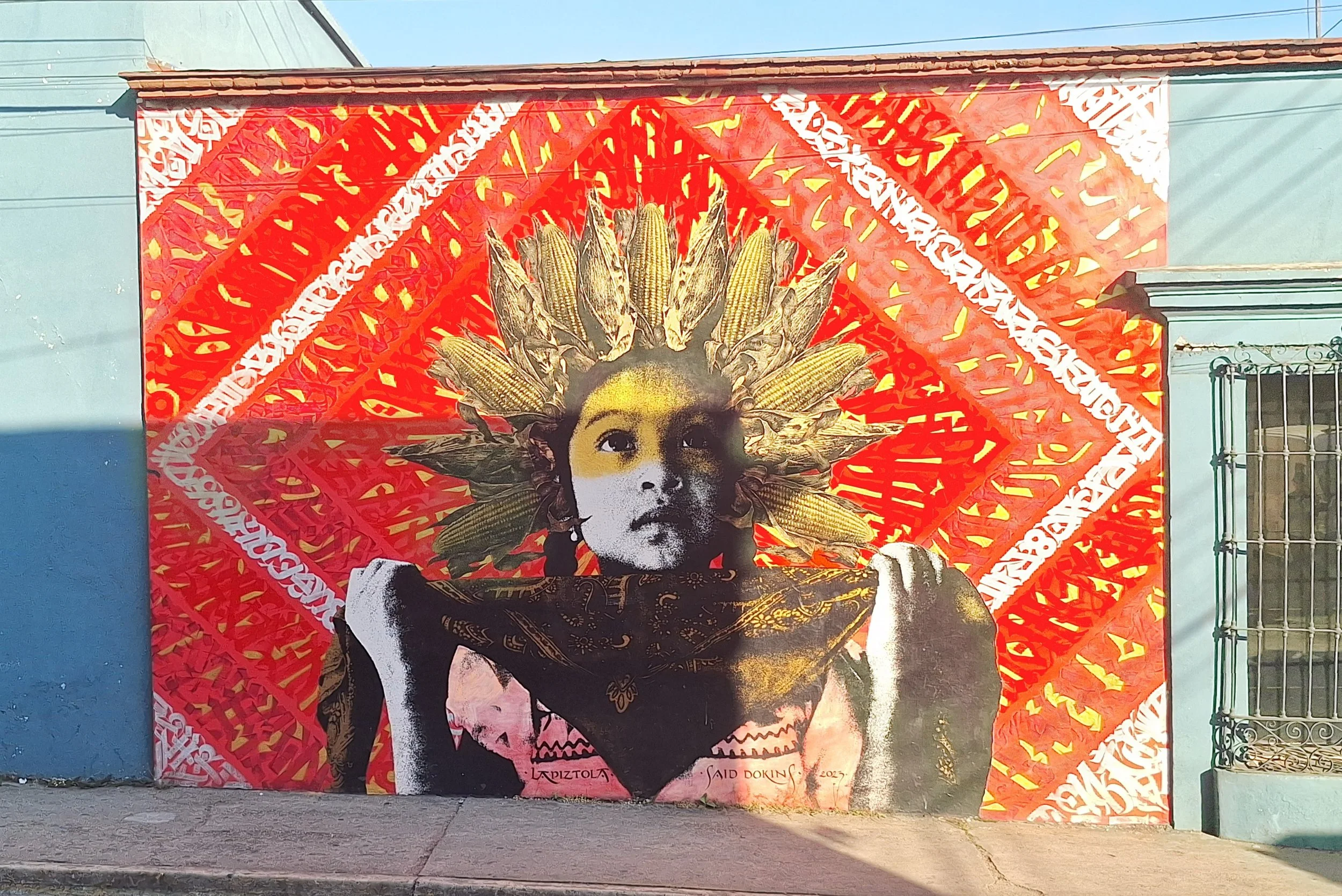
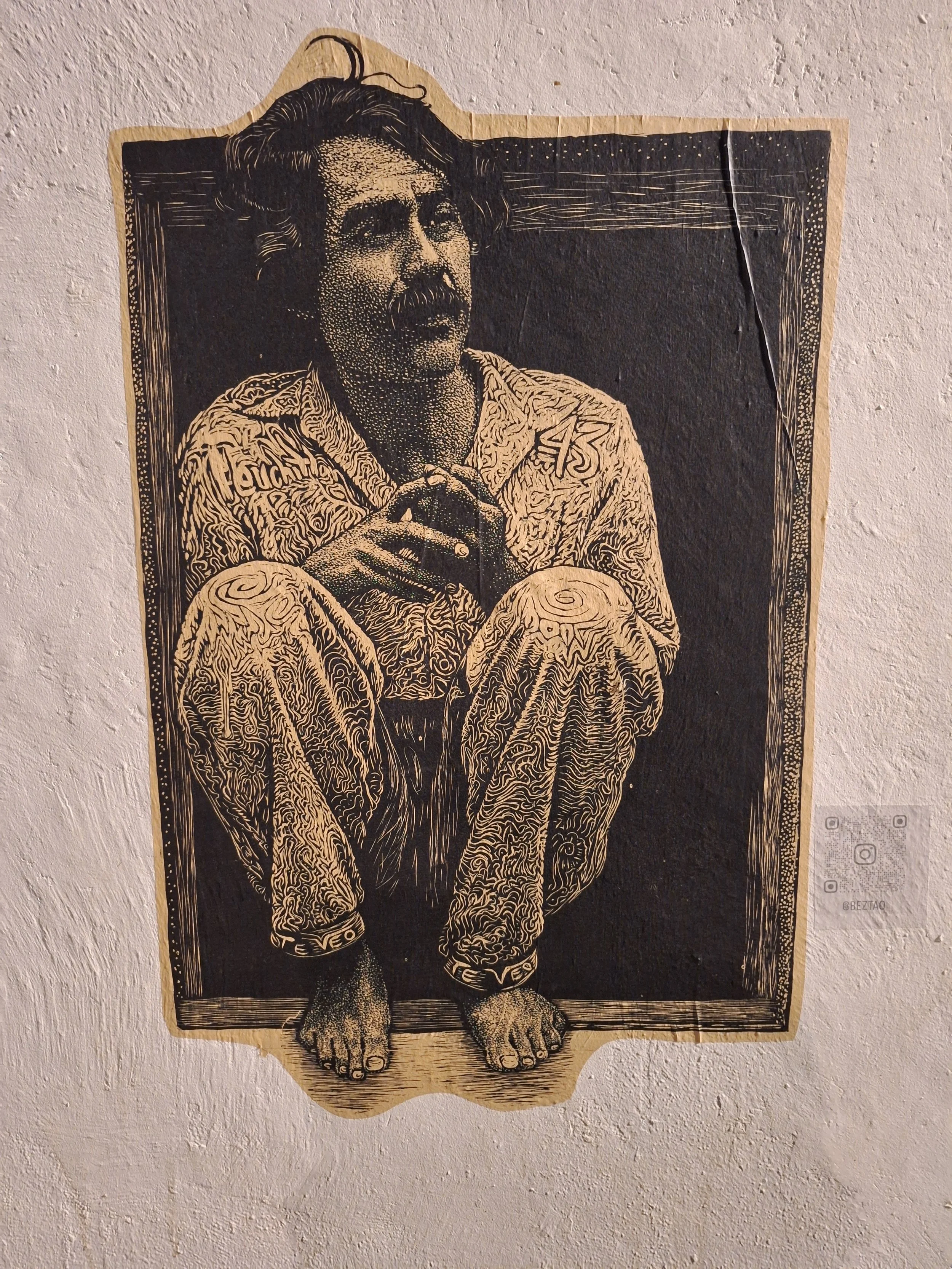
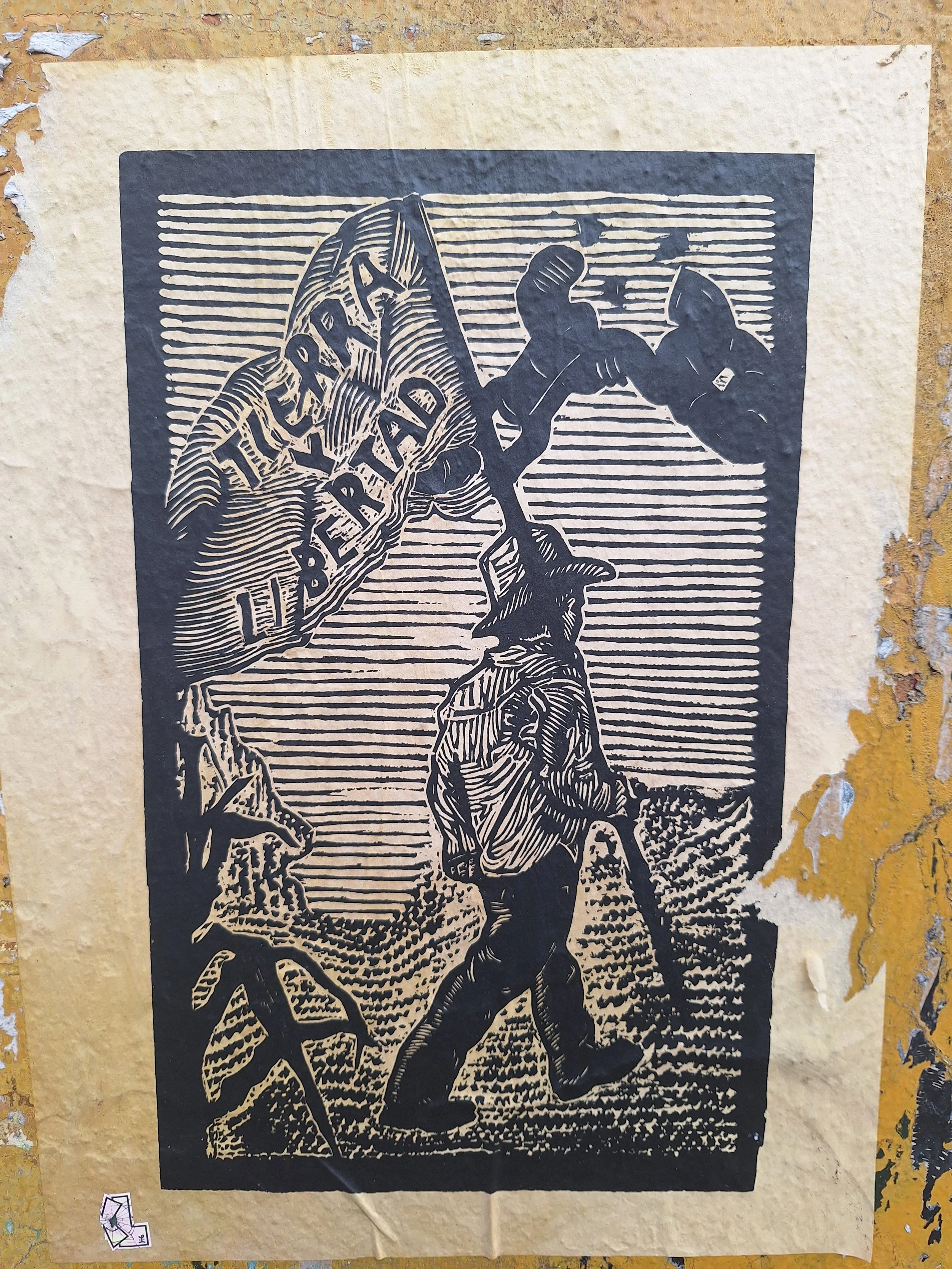
One of the many beautiful street murals in Oaxaca.
Five little pieces written during a three-week stay in Oaxaca in February 2026.
The Song of the Afilador
This afternoon, walking back from Spanish class to our apartment in the barrio of Xochimilco, I heard a distinctive high-pitched whistle – a long rising trill, repeated at regular intervals. I recognized this as the call of the afilador, the knife sharpener. When I turned a corner, I saw him – an older man with a wooden panpipe strung around his neck, walking his bicycle. His bike had a small grindstone mounted on back. The grindstone was connected to the back wheel, so that when the afilador raised that wheel off the ground and pedaled the bike, he could turn the grindstone and hone any blade for a modest fee. In Roma, Alfonso Cuaron’s beautiful movieabout his life in Mexico City in the early seventies, the song of the afilador serves as a motif, a sonic memory. For me also it’s a poignant memento of my travels in Mexico 45 years ago.
El Cancion del Afilador
Esta tarde, caminando desde la clase de español a nuestro apartamento en el barrio de Xochimilco, oí un silbo distintivo y agudo – un trino largo y creciente, repitado a intervalos regulares. Reconocí esto como la llamada del afilador. Cuando doblé la esquina, lo vi – un hombre bastante viejo con una zampoña de madera encordada alrededor de su cuello, paseando su bicicleta. Su bicicleta tenía una pequeña piedra de afilar montada en la parte posterior. La piedra estaba conectada a la rueda trasera, para que cuando el afilador levanté esa rueda del suelo y pedaleó la bicicleta, podría girar la piedra y afilar cualquier cuchillo por un precio modesto. En Roma, la película bellísima de Alfonso Cuaron, sobre su vida en la ciudad de México cuando era joven, en los años setenta, la canción del afilador sirve con un motivo, una memoria sónica. Para mí también es un recuerdo conmovedor de mis viajes a México, hace cuarenta y cinco años.
Sobre Los Barrenderos
Spending time in Oaxaca de Juarez, I’ve been delighted to notice those who quietly serve the essential purpose of purifying the city’s streets and plazas, doing so in roughly the same manner for at least the past fifty years. They sweep up dead leaves and blossoms, the oily scraps of street taco papers, the hard turds of the perritos callejeros (street dogs) who traverse the city with audacious purpose and authority. These city workers are the barrenderos, or street sweepers. Their wheeled carts are outfitted with two trash barrels and various side bags or pouches that I suspect separate actual trash from recyclables from sellable items from small found treasures.
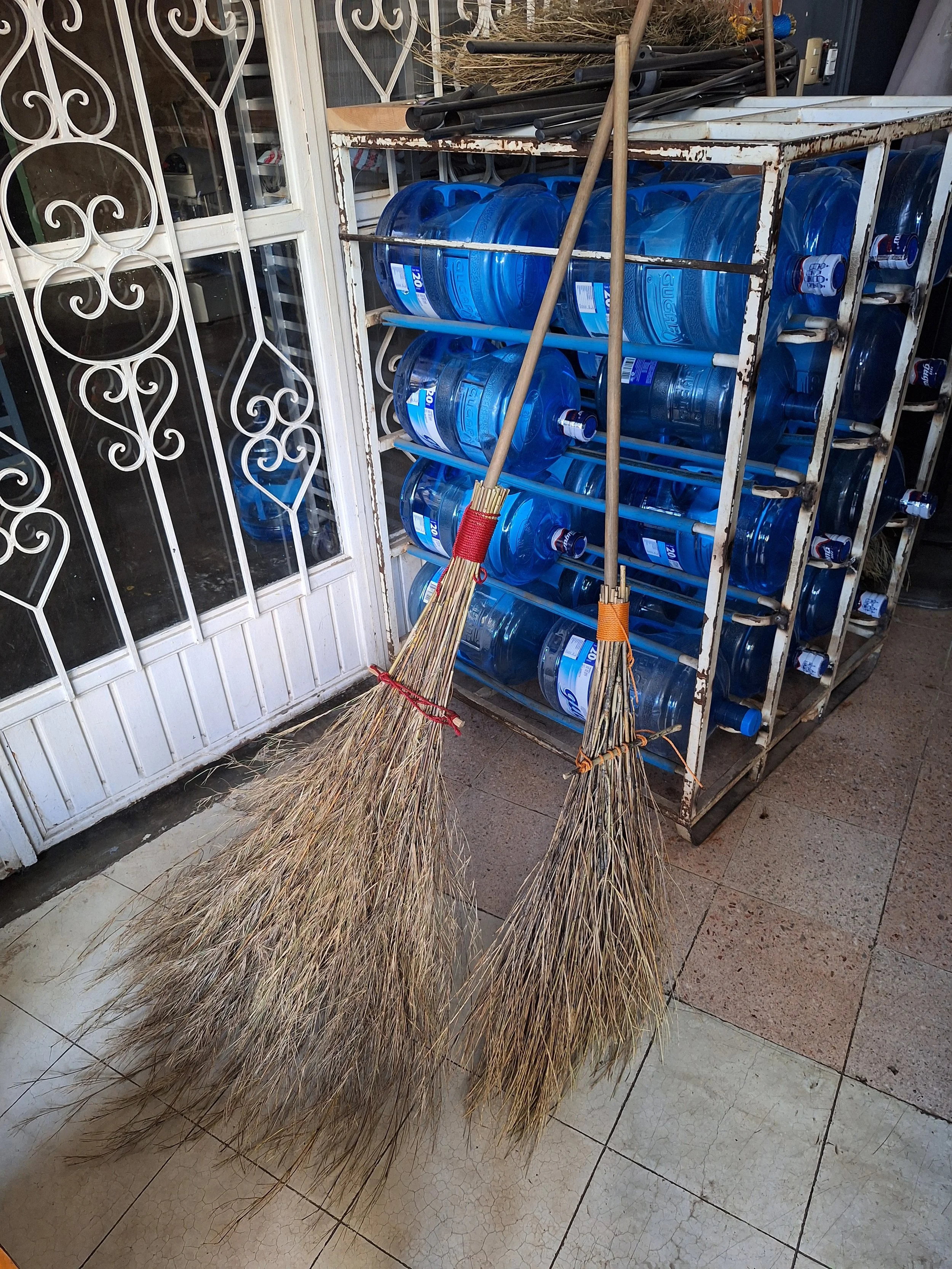
The barrenderos can be identified by the fluorescent orange safety vest they wear and the weapon they brandish in the battle to restore order, la escoba de otate, a long-bristled broom made from the stalks of the Mexican weeping bamboo. The stalks of Otatea acuminata, a drought-tolerant bamboo native to central and southern Mexico, tend to bend or weep from the weight of their leaves. These stalks are harvested and bound with twine to a broomstick, forming a long curving pushbroom that makes a wide swath, reaching into corners and crevices, especially effective on the city’s many cobblestone streets.
The barrenderos often start their day as early as three in the morning, la madrugada, so that by the time most folks are walking out the doors of their homes, order has been restored to the public streets and plazas. Each barrendero or barrendera has a territory and a route. In Mexico City, ten thousand barrenderos strive to keep that bustling metropolis as pristine as possible. These people are part of the nearly invisible workforce that keeps any city from falling into chaos and ruin, but here in Oaxaca on August 8, el Día al Barrendero, the dignity of their labor is recognized and celebrated. A festive calenda weaves through the city’s streets, featuring dancing, the distribution of dulces, and colorful fifteen-foot-tall mojigangas (cardboard puppets).
If the saying about cleanliness being god-adjacent has any truth to it, the barrenderos must surely be helping us get to heaven.
Printmaking and Politics in Oaxaca
In the latter half of the twentieth century, Oaxaca de Juarez developed a reputation as a printmaking center for not only woodcuts and linocuts but lithographs and engravings. In this city, the art form is grounded in a commitment to cultural identity, social equity, and the resilience of the human spirit.
The 2006 Oaxaca teacher strikes triggered an intense, creative explosion of printmaking and street art in support of the stand taken by the teachers for better pay and better funding for rural schools. When state police clashed with the teachers and attempted to dismantle their encampment in Oaxaca’s Zócalo, over a hundred people were hospitalized, angering citizens and transforming the strike into a much broader social movement. Thousands of students and their parents joined the teachers to form the Assemblea Popular de los Pueblos de Oaxaca (APPO).
During this seven-month uprising against the state government, artists and activists turned the city’s walls into a living newspaper, using stencils, silkscreens, and woodblock prints to document the conflict, denounce repression, and communicate with the public. The 2006 rebellion solidified the importance of printmaking and reinforced the connection between art and social struggle in Oaxaca.
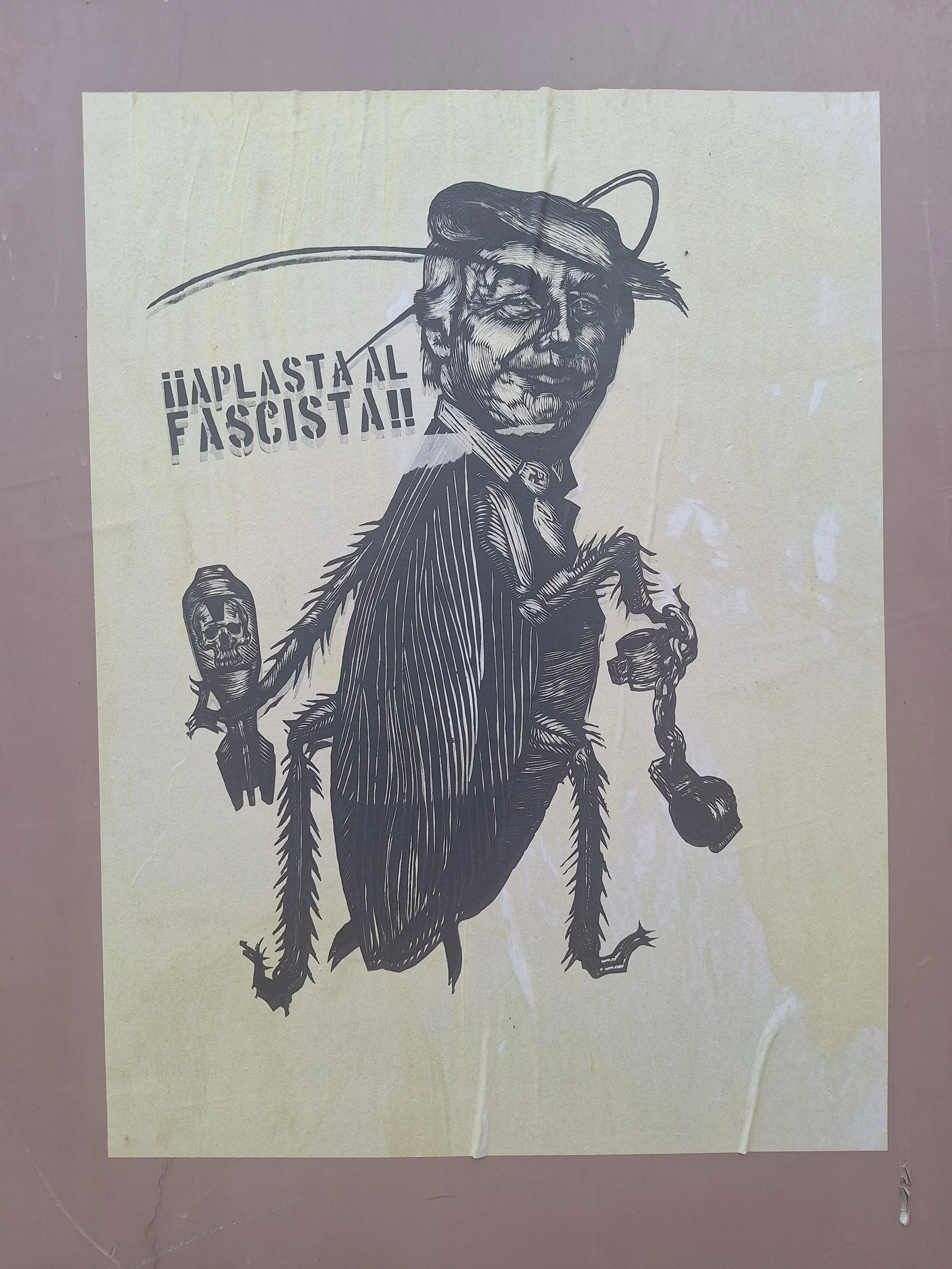
Twenty years later, the Espacio Zapata gallery on Calle Porfirio Diaz in el Centro – one of the two dozen talleres de grabado (printmaking workshops) active in the city – continues to serve as a hub for revolutionary art and community workshops. We’ve been delighted by the engaging prints plastered on the stucco walls of the city’s streets. Some address the corruption and oppression of the Mexican government, while others focus their biting poltical satire on Trump, MAGA, and ICE.
One afternoon after our Spanish classes, we were able to visit Espacio Zapata and three other talleres de grabado to watch the printmakers at work and support them with purchases of small woodcuts and linocuts. And during our time here, I’ve tried to document as many of their street posters as possible, offering a photographic witness to the artistry and passion of their work.
En Puerto Escondido
In the 45 years since I last visited Puerto Escondido on Oaxaca’s Costa Chica, the town has exploded in size – more tourists and hotels, more bars and restaurants, more surf shops and yoga studios. No longer is it a sleepy little fishing port somewhat overrun by (and infested by) gringo hippies and surfers.
Our weekend trip to Puerto Escondido didn’t start off fortuitously. The twenty open seats on the bus leaving from Oaxaca at 3:15 p.m. on Friday were suddenly reserved between Tuesday evening and Wednesday afternoon, so we had to take the bus leaving at 7:15 a.m. on Saturday, abbreviating our time at the beach. After a three-hour bus ride over the Sierra Madre del Sur,[1] we grabbed a taxi to our little room, dropped off our backpacks, and walked the four blocks down to Playa Zicatela, a top-notch surfing beach with a steep drop-off. We thought we’d just wade in up to our knees, but the ocean’s powerful undertow pulled us into deep water and crashing waves. I had to haul Cile – still recovering from bronchitis – gasping back to shore with the help of two young women nearby.
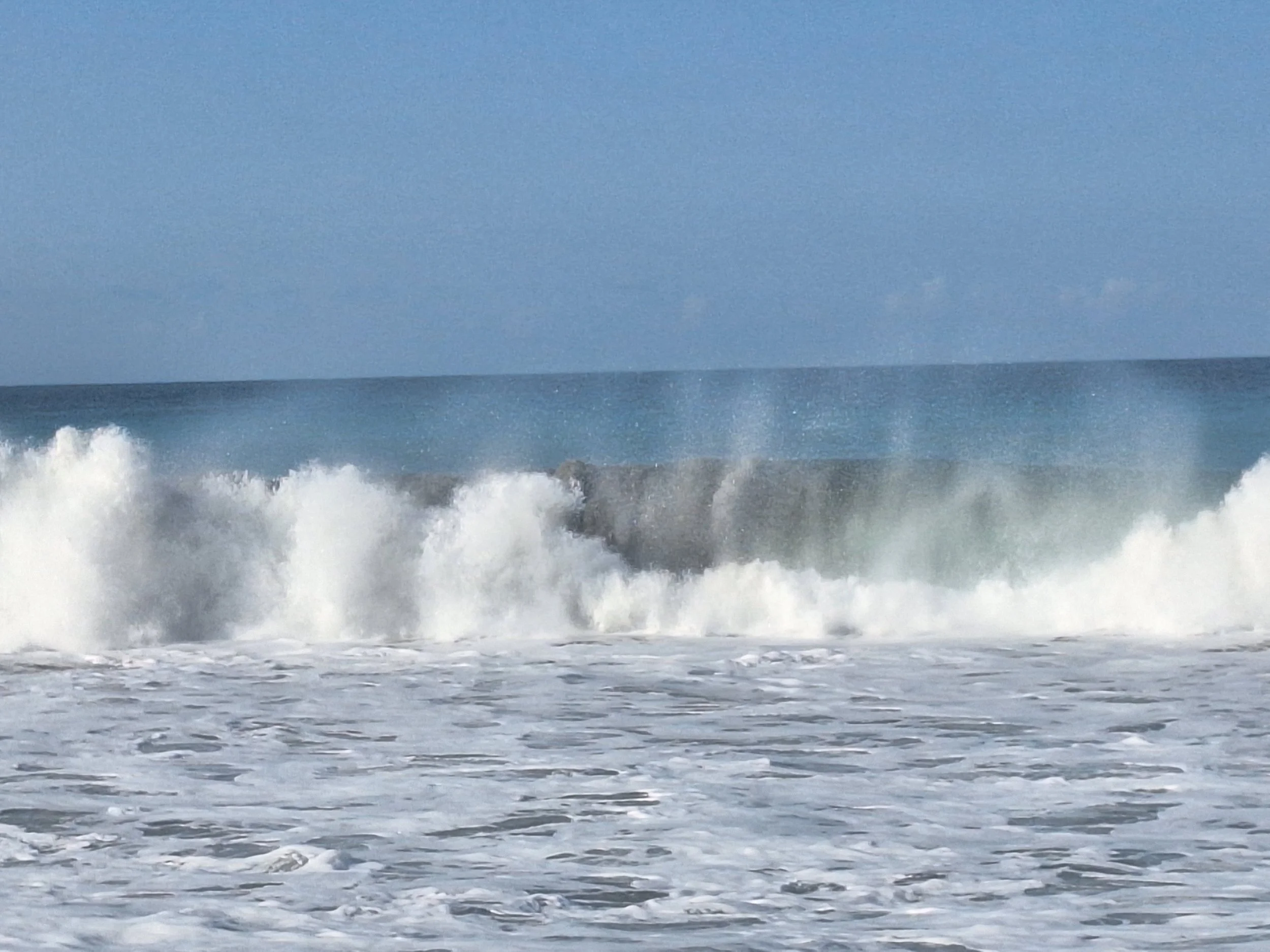
But the beach life is still the beach life. It’s hard to ruin that. On Sunday morning, we walked along the shoreline, away from town. The fierce waves broke to our right, each one a Hokusai print come to life, their remnants rolling up the beach to wrap our feet in seafoam. A string of twenty brown pelicans skimmed along the perfect curl of a wave, scanning for breakfast. In that moment, nothing else mattered.
On our way back, we stopped at a beachfront café, the kind of place you’ll find throughout Mexico, like the tiny two-table storefront comedores that are part of someone’s home. The young waitress gestured us toward a couch facing a low wooden table. We sat down in the shade of a palm thatch awning, our feet in the sand, and requested breakfast.
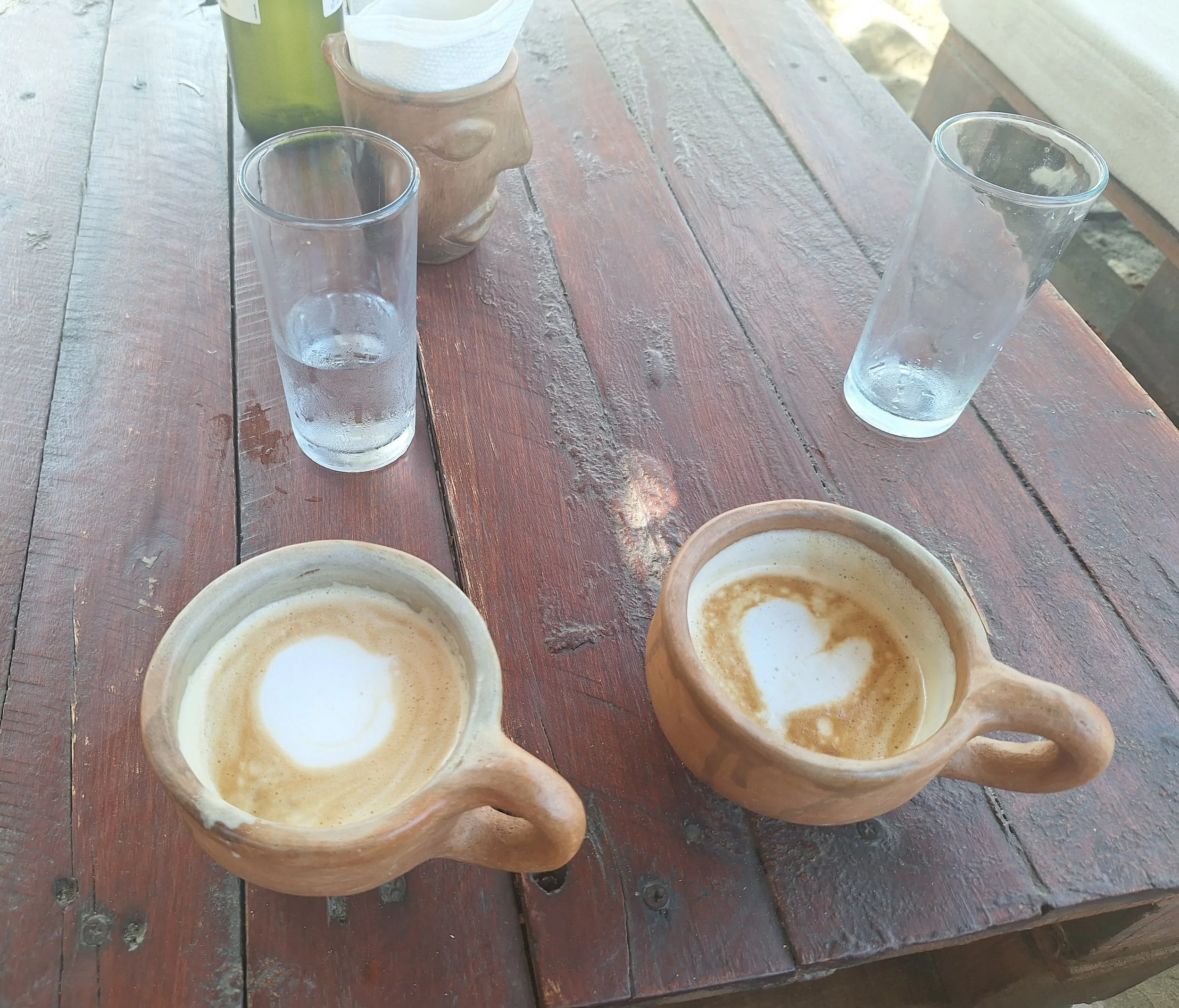
Soon, two cups of latte arrived in thick handmade clay mugs, two hearts in foam. In the open-air kitchen five steps away, two chefs were creating their art. We were served bowls of acai, topped with an elegant array of sliced bananas, mangos, and apples, sprinkled with grated coconut, dried cherries, almonds, granola, and pepitas. It was as nourishing as it was aesthetically pleasing.
We were all listening to Fleet Foxes while waves crashed in the background. Our gazes turned seaward, we admired the frisson of an azure blue sky kissing a slightly deeper blue Pacific. All we were invited to do was to appreciate these gifts, to live in this moment, to partake in this simple and unassuming slice of happiness.
In the Land of the Zapotecs
It was a winding nine-kilometer and thirty-minute bus ride from the Zócalo that transported us through time to la zona arqueológica de Monte Albán. Situated atop a 1,400-foot-high peak overlooking the three Valles Centrales that converge at what is now Oaxaca de Juarez,[2] Monte Albán was one of the earliest Mesoamerican cities. For over a millennium, from roughly 500 BCE to CE 700, it flourished as the religious, economic, and political capital of the Zapotec people who ruled this region while maintaining a precariously peaceful coexistence with the Aztecs to the north and the Mayas to the east.
We followed a crushed gravel path around the site, stopping at the ruins of outlying tombs and surveying the valleys below and, beyond them, the other cordilleras of the Sierra Madres. We turned off the path to climb two dozen rough stone steps leading to a sunken patio, a ballcourt, and a scattering of minor pyramids. The whole experience was an exercise in noticing what remains and imagining what was here countless lifetimes ago.
We made our way to the North Platform and looked out over the Great Plaza, 150 by 300 meters (the size of nine U.S. football fields). The Zapotecs leveled this mountaintop, hewing out each stone then used to build the pyramids, temples, and tombs positioned around the Great Plaza. At the height of their civilization, over 17,000 people lived here, and we pictured them gathered here for some ceremonial event. Edging down the two-foot-high stone steps, we crossed the expanse, and climbed the fifty steep steps of the pyramid to the top of the South Platform.
Mid-afternoon in late February, the sun was fierce, and we paid our respects to the Zapotec sun god, Pitao Cozobi. The shimmering colors of stone and earth and sky were vibrant. A crested caracara wheeled above us, searching for lizards and snakes, his shadow repeatedly crossing our path.
Civilizations come and go.[3] Yet, here linger resilient vestiges. On the bus back to Oaxaca, we sat beside a Zapotec couple we met among the ruins, and eavesdropped on their conversation, rapt by the melodic tonal complexity of the language, peppered with its fricative ixsh and chks. Equally fascinating was how they at times seamlessly moved from Zapotec into Spanish and English as they conversed.
Back in the city, we stopped at Mercado Benito Juarez to search out one of the women who sells tejate, the traditional Zapotec beverage made from toasted maize and mamey pits, fermented cacao, and rosita de cacao. It is ground into a paste and then mixed with water in a large clay olla, the oil of the cacao flowers forming a white custardy foam. When the woman poured us a glass, she lifted her gourd dipper high to encourage the foamy head. It was mildly sweet, grainy, and fulfilling, in the words of the Zapotecs, la bebida de los dioses (the drink of the gods).
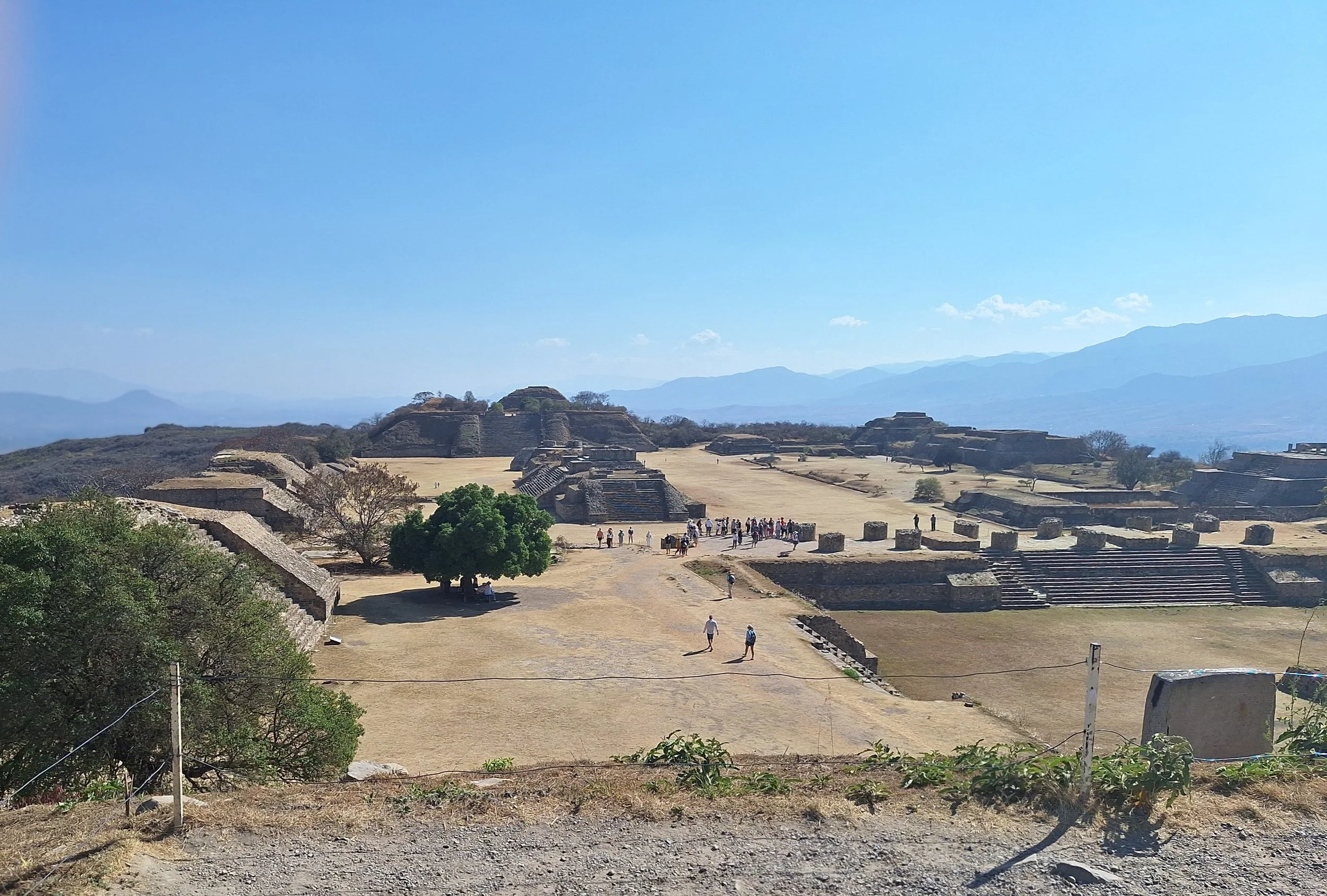
Looking out over the Great Plaza toward the South Platform of Monte Alban.
Footnotes
[1] Thanks to a new highway, the bus ride takes almost a third of the time it took in 1980.
[2] Which is itself 5,000 feet above sea level.
[3] What will be said about ours, about the ruins of buildings, bridges, airports, tunnels emblazoned with that single cryptic word, Trump?